
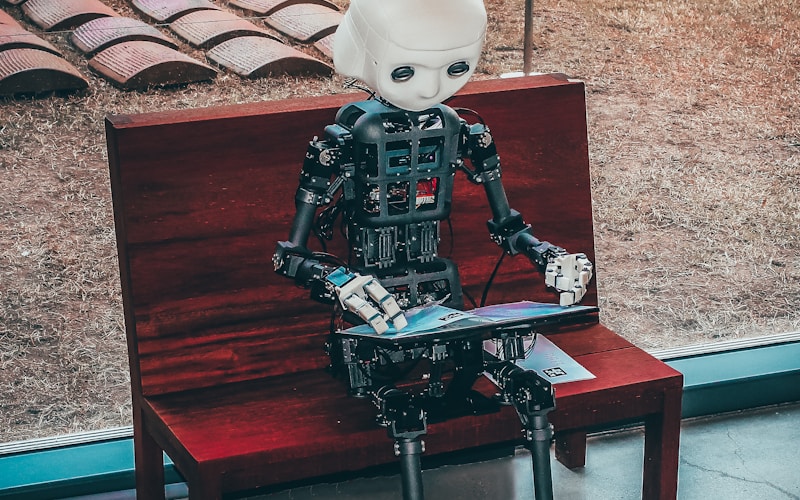
How artificial intelligence is revolutionizing the way we build, deploy, and maintain web applications, from automated testing to intelligent code generation.
Artificial intelligence is fundamentally reshaping the landscape of web development. We are moving past the era where AI was merely a buzzword or a theoretical concept—today, it is an active participant in the software development lifecycle (SDLC). For modern agencies and developers, integrating AI into daily workflows is no longer optional; it is a necessity to remain competitive, deliver faster, and ensure higher quality.
Intelligent Code Generation and Assistance
One of the most immediate impacts of AI in web development is the rise of AI-powered coding assistants like GitHub Copilot, Cursor, and ChatGPT. These tools act as pair programmers, analyzing context and suggesting entire blocks of code, boilerplate setups, and even complex algorithms.
But the real power lies beyond simple autocomplete. Modern AI models can refactor legacy code, translate components from one framework to another (e.g., converting a React component to an Astro component), and write comprehensive unit tests. This drastic reduction in manual typing allows developers to focus on higher-level architectural decisions and user experience rather than getting bogged down in syntax.
Automated Testing and Quality Assurance
Quality Assurance (QA) has traditionally been one of the most time-consuming phases of web development. Writing robust test suites for end-to-end (E2E) testing, integration testing, and unit testing requires immense effort.
AI changes this paradigm by automating test generation. AI tools can crawl a web application, understand its user flows, and automatically generate test scripts using frameworks like Playwright or Cypress. Furthermore, AI-driven visual regression testing can detect UI anomalies—such as a misaligned button or a broken CSS grid—across hundreds of device and browser combinations in seconds, something that would take human testers hours to accomplish.
Personalization at Scale
From an end-user perspective, AI enables unprecedented levels of personalization. Traditional web applications rely on static rules or basic segmentation to serve content. AI, however, leverages machine learning algorithms to analyze user behavior in real time.
By integrating AI APIs (such as OpenAI, Anthropic, or specialized recommendation engines), web applications can:
- Dynamically adjust layouts based on user preferences.
- Serve highly targeted content and product recommendations.
- Utilize advanced Natural Language Processing (NLP) to power intelligent chatbots that actually resolve customer issues rather than just routing them to a human agent.
DevOps and SecOps Automation
At GrassHopper Digital, we heavily emphasize DevOps and SecOps. AI is proving to be a game-changer here as well. Predictive analytics can monitor server loads and automatically scale infrastructure up or down before a traffic spike impacts performance.
In terms of security (SecOps), AI models are trained to recognize patterns of malicious behavior, such as DDoS attacks or SQL injection attempts, mitigating them instantly. They can also scan source code for vulnerabilities during the CI/CD pipeline, ensuring that insecure code never reaches production.
The Future: AI-Native Applications
We are transitioning from “web apps with AI features” to “AI-native web applications.” These are systems built from the ground up around Large Language Models (LLMs) and vector databases (like Pinecone or Weaviate). In these applications, the UI itself might be generated dynamically based on the user’s conversational intent.
As we look to the future, the developers who will thrive are those who master the orchestration of AI tools—blending human creativity with machine efficiency to build the next generation of the web.